
Thirty-day challenges have a bad reputation, largely because most of them are designed badly. Done properly, a challenge is one of the more effective tools for someone whose actual problem is consistency rather than programming.
What a good challenge looks like
- One thing. Not five. One movement, one habit, one session type.
- Small enough for your worst day. If it is only possible on a good day, you will fail on the first bad one — and the first bad one is coming.
- Requires no equipment or travel. Anything with a dependency has a failure mode.
- Takes under fifteen minutes. Long enough to matter, short enough to be non-negotiable.
- Has a clear end. Thirty days. Then it stops.
Why the published ones fail
The classic format escalates aggressively — day one is five reps, day thirty is a hundred. That curve looks motivating on a graphic and is a poor fit for how anyone actually adapts. Most people fall off somewhere in the second week, and the reason is the design, not their willpower.
If a challenge is only possible on a good day, it ends on the first bad one. And the first bad one is coming.
Better versions
- Thirty days of ten minutes of movement. Anything counts. The streak is the goal.
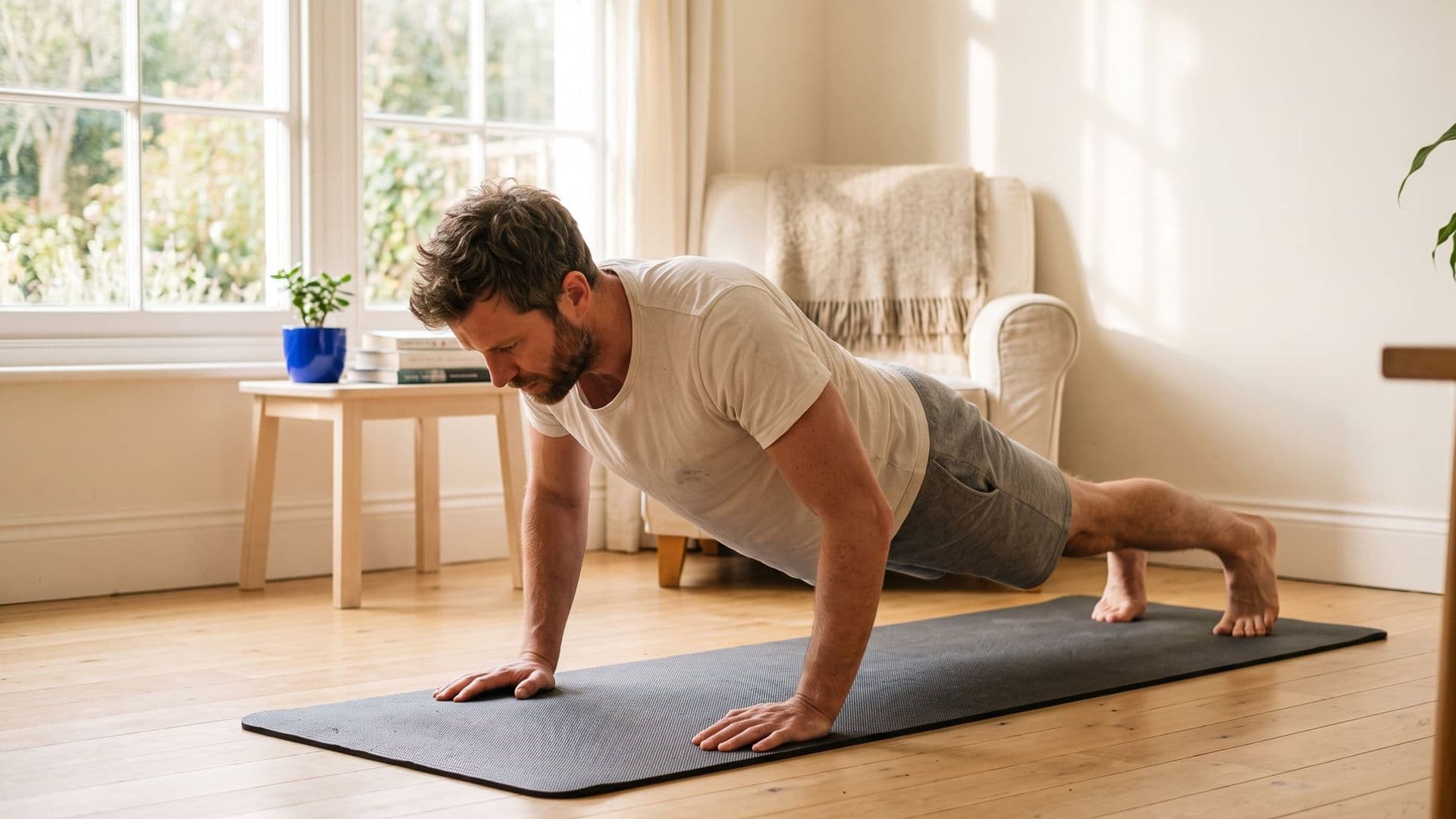
- Thirty days of one set to near-failure. Press-ups, squats, a hang. One set, daily.
- Thirty days of a morning walk. Fifteen minutes, before anything else.
- Thirty days of a mobility routine. Ten minutes, the same five movements.
None of these are impressive. All of them are finishable, and finishing one changes what you believe about yourself more than any single hard session does.
The minimum version
Before you start, decide what the smallest acceptable version is. One press-up. A five-minute walk. On a genuinely terrible day, you do that and the streak survives.
This is better than building in rest days, because a rest day is a decision and decisions are where streaks break. A minimum version is not a decision — it is just the floor.
Afterwards
Do not immediately start another one. Take what you learned — which is usually that you are more consistent than you thought — and put it into a real training plan with an actual goal at the end.